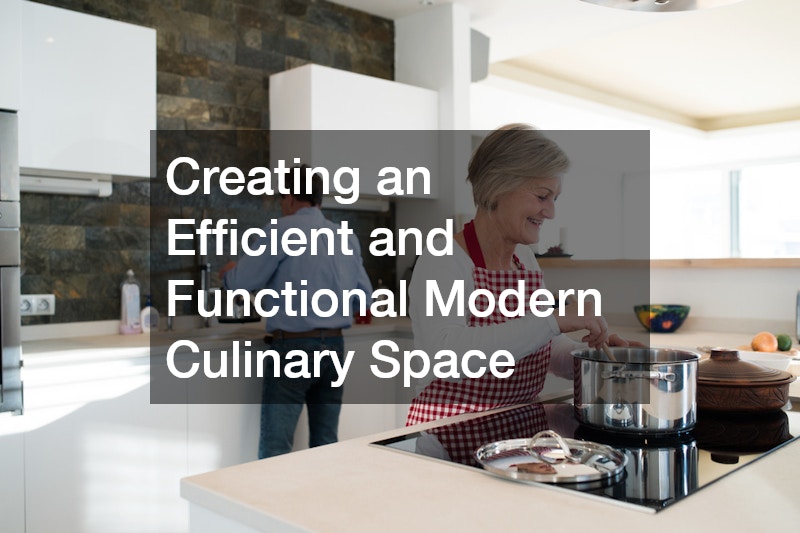
The kitchen is the hardest-working room in any home. It absorbs spills, heat, foot traffic, and daily chaos, yet it’s also expected to look good, run smoothly, and hold its value for decades. Most kitchen upgrades fall short not because of budget limitations, but because homeowners prioritize how a kitchen looks over how it actually works. The most efficient culinary spaces share a common thread: every decision from the floor underfoot to the lighting overhead is made with both function and longevity in mind. This guide walks you through every major layer of a kitchen transformation, giving you the knowledge to make smarter choices whether you’re doing a full renovation or a targeted refresh.
Plan Before You Pick a Single Tile: Designing Around Your Cooking Habits
Map your kitchen workflow zones before touching anything else
Before you choose a cabinet color or countertop material, spend a week paying close attention to how you actually use your kitchen. Where do you set down groceries when you walk in? Where does clutter naturally accumulate? Where do two people bump into each other during meal prep? These friction points are your design data.
Modern kitchen planning has largely moved beyond the classic “work triangle” (sink, stove, refrigerator) toward a zone-based approach. A well-designed kitchen contains at least four distinct activity zones:
- Prep zone: Ample counter space near the sink with easy access to knives, cutting boards, and a trash/compost point
- Cook zone: The range or cooktop with landing space on both sides and nearby access to oils, spices, and cookware
- Clean zone: The sink and dishwasher are in close proximity, with a logical staging area for dirty and clean dishes
- Storage zone: Pantry, refrigerator, and dry goods storage grouped to minimize cross-kitchen trips
A professional kitchen designer does far more than select finishes. They analyze your floor plan for traffic flow, identify load-bearing walls that affect layout options, ensure the design meets local building codes, and help you avoid expensive mistakes before any demo begins. Their fee typically pays for itself in avoided errors.
Decide your remodeling scope early to avoid costly mid-project pivots
One of the most expensive mistakes in kitchen remodeling is starting with a cosmetic refresh and expanding mid-project into structural work once the walls are open. Decide your scope upfront. A cosmetic remodel — new paint, hardware, countertops, and appliances can be done in phases and lives within a tighter budget. A full gut renovation that moves plumbing, rewires circuits, or reconfigures the floor plan requires permits, licensed trades, and a more substantial timeline.
If budget is a constraint, prioritize infrastructure (plumbing, electrical, layout) in phase one. Surfaces and finishes can follow. Upgrading cosmetics over a bad layout is a guaranteed source of long-term frustration.
Countertops Are a Working Surface First — Choose Material Accordingly

Match your countertop material to how hard your kitchen actually works
Your countertop takes more daily abuse than almost any other surface in the home: hot pans, acidic foods, raw meat, knife pressure, and constant cleaning. Choosing based purely on appearance is one of the most common and costly kitchen mistakes.
Quartz has become the dominant choice in high-use kitchens for good reason. It is engineered from natural quartz crystals and resin, making it non-porous, highly resistant to staining, and consistent in pattern, unlike natural stone, which varies slab to slab. Hiring a skilled quartz countertop installer is worth the investment. The quality difference between a professional and a cut-rate installation shows up in the seams, the edge profiles, and the templating precision. Poor seam traps bacteria and creates weak points that crack under pressure. Ask installers for references, verify their templating process, and inspect their portfolio of completed seams before signing.
Marble countertop surfaces bring a warmth and elegance that engineered materials still struggle to replicate. The veining is genuinely one-of-a-kind, and serious home bakers love that marble stays naturally cool, making it ideal for pastry work. However, the tradeoffs are real: marble etches when it contacts acidic substances like lemon juice or vinegar, it requires periodic sealing, and it will develop a patina over time. This isn’t necessarily a flaw — many homeowners embrace the lived-in character, but it is a commitment.
What to verify before hiring anyone to install stone surfaces
A practical approach many designers recommend is using quartz for the main perimeter work surfaces where prep and cooking happen, and marble for a focal-point island or bar area where the aesthetic impact is high and the functional demands are somewhat lower. This gives you the best of both materials, where each performs well.
When evaluating countertop thickness, edge profiles, and overhang depth, remember that these aren’t just aesthetic choices; they affect how comfortable the surface is to work on and how much knee clearance you have at seating areas.
Pick a Floor That Survives Spills, Dropped Pans, and Daily Traffic

Why kitchen floors fail faster than any other surface in the home
No surface in a kitchen takes a more consistent beating than the floor. It contends with water pooling near the sink, grease splatter around the range, the constant friction of foot traffic, the weight of heavy appliances, and the occasional dropped cast-iron pan. Many homeowners choose their kitchen floor based on how it looks in a showroom, only to find it scratched, warped, or stained within two years under real conditions.
How to evaluate luxury vinyl flooring quality before you buy
Luxury vinyl flooring has become the material of choice in modern kitchen renovations, and the technology behind it has improved dramatically. Unlike the thin, hollow-sounding vinyl of earlier decades, today’s luxury vinyl flooring is constructed in multiple bonded layers: a rigid or semi-rigid core, a high-resolution photographic layer that realistically mimics wood grain or stone, and a protective wear layer on top. The result is a floor that is fully waterproof, comfortable underfoot, and capable of handling genuine daily punishment.
The specification that matters most when comparing options is the wear layer thickness, measured in mils. For a kitchen, you want a minimum of 12 mil; anything thinner will show scratching within a few years of normal use. Commercial-grade options run 20 mil or higher and are worth considering in households with heavy traffic or pets.
Installation method matters too. Click-lock luxury vinyl flooring floats above the subfloor and is easier to replace in sections if a plank is damaged. Glue-down installation creates a more rigid, stable feel underfoot and is better suited for large open spaces. Both require a flat, clean subfloor — any unevenness greater than 3/16 inch over 10 feet will telegraph through the planks over time.
Always order 10–15% more material than your square footage requires. This accounts for cuts at walls and doorways, and ensures you have matching planks available for future repairs before the dye lot is discontinued.
Refresh Your Kitchen’s Entire Feel Without Demolishing a Thing

Use paint strategically to make your kitchen feel larger, cleaner, and more cohesive
Paint is the highest-return investment in any kitchen refresh. A well-executed repaint of walls and cabinets can make a dated kitchen feel entirely current without touching the layout or replacing a single fixture. But kitchen painting requires more thought than rolling color on a wall.
Sheen level matters as much as color in a kitchen environment. Matte paint absorbs grease and moisture and cannot be scrubbed without wearing down — it has no place in a kitchen. Satin is the practical minimum, offering some sheen and reasonable washability. Semi-gloss is the preferred choice for cabinets and trim, as it holds up to repeated cleaning and resists moisture absorption more effectively.
For cabinet repainting, the decision comes down to condition and cost. If your cabinet boxes are structurally sound and the doors are flat or have simple profiles, repainting is a legitimate alternative to replacement — typically at one-quarter to one-third of the cost. Cabinets with extensive water damage, warped doors, or soft, particleboard construction that’s beginning to swell are better candidates for replacement.
Know when professional painting services are worth every penny in a kitchen
The most popular color directions in modern culinary spaces include warm off-whites, muted sage greens, deep navy, and greige tones that work across multiple lighting conditions. Two-tone cabinet schemes, lighter uppers, darker lowers, have become a defining feature of contemporary kitchen design, adding visual depth without overwhelming the space.
Professional painting services are strongly worth considering for kitchens specifically. Kitchen walls accumulate grease film that is largely invisible but causes paint to peel within months if not properly addressed. Professionals degrease surfaces, apply appropriate primers, and work with the ventilation challenges that kitchens present. The precision required around cabinet frames, tile backsplash edges, and appliance cutouts is also significantly harder to achieve with a DIY approach.
Upgrade Your Plumbing Before the Walls Close Up
Fix and upgrade plumbing during a remodel — not after the drywall goes back up
Plumbing is the element of a kitchen renovation most likely to be underestimated until something goes wrong. The rule is straightforward: if the walls are open during a remodel, address every plumbing improvement on your list before they close again. Doing it afterward means cutting back into finished surfaces at high cost.
Common plumbing upgrades worth building into a kitchen project include:
- Switching from a top-mount to an undermount or farmhouse sink for easier counter-to-sink cleanup
- Adding a dedicated prep sink in a large kitchen or island
- Installing a pot-filler above the range to eliminate carrying heavy pots from the sink
- Upgrading to a pull-down or touchless faucet for improved functionality
- Adding a filtered water tap at the sink
Know which garbage disposal issues need a professional before a small problem becomes a big one
Garbage disposal repair is one of those tasks that sits in a gray zone between DIY and professional territory. Clearing a jammed disposal using the reset button and a hex key is a legitimate homeowner task. So is removing and replacing a disposal unit if you’re comfortable working under a sink. But persistent humming that indicates a burned motor, active leaks from the body of the unit (not the connections), and electrical failures are situations that call for a licensed plumbing contractor.
A qualified plumbing contractor is also the right call when your remodel involves relocating the sink drain line, adding a second sink to an island that requires new rough-in plumbing, or connecting a water filtration system to the main supply. These are permit-required jobs in most jurisdictions, and unpermitted plumbing work creates real problems at resale.
Before any remodel begins, consider having a plumber run a camera through your drain lines. Older homes frequently have partial blockages, root intrusion, or deteriorating pipe sections that become emergencies once construction increases water usage and vibration.
Wire Your Kitchen for Today’s Appliances — and Tomorrow’s

Add dedicated circuits now or pay for emergency electrical work later
Modern kitchens demand significantly more electrical capacity than homes built even 20 to 30 years ago. A residential electrician inspecting an older kitchen will frequently find undersized panels, shared circuits running multiple appliances, and outlet placement that no longer reflects how kitchens are actually used. Addressing this during a remodel is dramatically less expensive than calling for emergency work after a tripped breaker or a small electrical fire.
Every major appliance in a kitchen should have its own dedicated circuit: the refrigerator, microwave, dishwasher, garbage disposal, and any wall oven or range. The countertop small-appliance circuits — for toasters, coffee makers, mixers, and similar items should be on at least two separate 20-amp circuits as required by most current electrical codes.
Lighting deserves a layered approach. Recessed lighting provides general ambient illumination. Under-cabinet lighting, ideally LED strips on a dimmer, handles the task lighting needed for prep work without casting shadows from your body. Pendant lights over an island add warmth and visual interest while contributing to the overall light level. Running dedicated wiring for smart dimmers, USB outlets, and motion-sensor switches during a remodel adds minimal cost compared to retrofitting later.
Know the repair-vs-replace threshold for every major kitchen appliance
Appliance repairs represent a recurring cost that most homeowners underestimate. The general guideline is this: if a repair costs more than 50% of the appliance’s current replacement value, replacement is typically the smarter investment. Common repairable issues include refrigerator ice maker failures, door seal replacement, dishwasher spray arm clogs, door latch failures on dishwashers, and igniter or control board issues on gas ranges — all of which a qualified technician can address at reasonable cost. Compressor failure on a refrigerator, on the other hand, almost always justifies replacement, given the labor and parts cost involved.
When hiring for appliance repairs, verify that the technician is certified for your specific brand and that the repair will not void any remaining warranty. Many manufacturers maintain networks of authorized service providers.
A truly efficient and functional culinary space isn’t built in a single decision; it’s the result of layered, deliberate choices across design, surfaces, flooring, color, plumbing, and electrical systems, each one reinforcing the others. The homeowners who get the most from their kitchens are the ones who resist the pull of aesthetics-first thinking and instead ask “how will this perform in three years?” before committing to any material or system. If a full transformation isn’t possible right now, a phased approach, infrastructure first, surfaces second, finishes last, will always outperform a cosmetic renovation built on a foundation that hasn’t been addressed. The best kitchen isn’t the most expensive one on the block. It’s the one engineered, intentionally and honestly, around the way you actually live.